Walking may become slower, shorter and more effortful because symptoms appear when the lower back is held upright or extended. By tracking when symptoms start, comparing them with other causes of limited mobility and adapting daily tasks safely, you can describe the problem clearly and know when it needs medical assessment.
Key takeaways
- Sitting or leaning forward often relieves stenosis-related leg pain during walking.
- Track walking distance, standing time, symptoms, and recovery after sitting.
- Use handrails, clear floor hazards, and avoid walking through worsening leg weakness.
- Seek urgent care for new bladder or bowel loss, saddle numbness, or severe weakness.
Why Standing and Walking Bring on Leg Symptoms
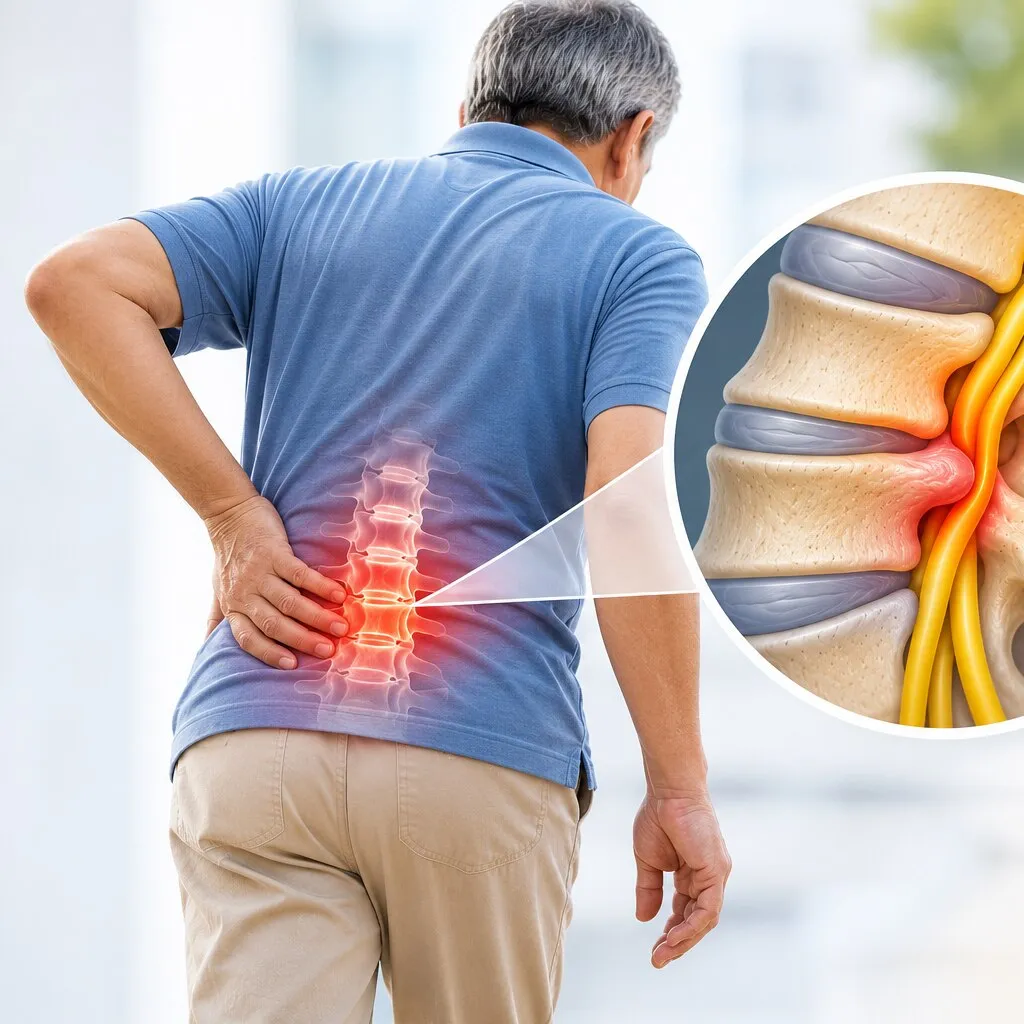
Standing or walking upright can bring on neurogenic claudication because lumbar extension narrows the space available for the spinal nerves. As you remain on your feet, symptoms may spread into one leg, both legs, or affect each side differently. Sitting or bending forward usually reduces the load on those nerves and brings relief.
Symptoms can include:
- Pain in the buttock, thigh, calf or foot
- Tingling or pins-and-needles
- Numbness
- Leg heaviness
- Weakness when lifting or advancing the foot
- A foot that feels unreliable or begins to drag
These changes alter walking mechanics. You may take short steps and slower pace, pause more frequently, or avoid walking upright because each stride increases discomfort. Foot weakness can make toe clearance difficult, raising the risk of catching a shoe on uneven ground.
Severe walking limitation can occur even when back pain is mild; back-pain intensity does not measure nerve-related disability.
Flexion increases space around the nerves, so leaning over a shopping trolley, walker or counter can make movement easier than standing straight. This posture is a useful clue, not proof of stenosis: hip or knee disease, poor conditioning, peripheral neuropathy and circulation problems can produce similar limits.
A clinician must match the pattern with an examination and, when needed, further testing.
How to Tell Stenosis-Related Limits from Other Walking Problems
A posture-dependent walking limit points toward lumbar stenosis, but it does not prove it. The shopping-cart sign—walking farther while leaning forward—is useful history, not a diagnosis. Hip arthritis, knee disease, deconditioning, peripheral neuropathy and vascular claudication can restrict walking in similar ways. Symptoms can affect one leg, both legs or one more than the other.
Back-pain intensity does not measure walking disability.
| Pattern | Typical clues | Relief or trigger |
|---|---|---|
| Lumbar stenosis | Buttock, thigh, calf or foot pain, tingling, heaviness or weakness | Standing or walking triggers it; sitting or bending forward helps |
| Vascular claudication | Calf cramping at a predictable distance; foot may feel cold | Rest helps, even while standing; posture does not control it |
| Hip arthritis | Groin or outer-hip pain; reduced hip rotation | Walking, stairs and turning can hurt; sitting reduces load |
| Peripheral neuropathy | Burning, numbness or reduced feeling in both feet | Symptoms persist beyond a specific walking distance |
| Balance disorders | Unsteadiness, veering or falls without a consistent pain pattern | Visual support or steady footing helps more than sitting |
| Simple muscle fatigue | Tired muscles after exertion without tingling or numbness | Rest and recovery restore strength |
Record these details before your appointment:
- Walking distance or minutes before symptoms begin
- Standing time before symptoms begin
- Exact symptom location and whether one or both legs are involved
- Time to onset and whether the distance changes from day to day
- Whether sitting reliably relieves symptoms, rather than merely stopping activity
What Stenosis Changes in Everyday Mobility
A short walking limit can reshape an entire day. Climbing stairs may require a pause at each landing; shopping and public transport become difficult when no seat is available. Bathing and cooking demand planning because standing on a wet floor or at a counter can bring on leg symptoms before the task is finished.
| Task | Safer approach | What to avoid |
|---|---|---|
| Climbing stairs | Use a handrail, take one step at a time, and rest on a landing | Carrying loads while symptoms are active |
| Shopping and public transport | Choose a trolley or walker with a seat, shop during quieter hours, and plan seated breaks | Rushing for a bus or standing through a long journey |
| Bathing and cooking | Use a shower seat, non-slip surface, and a high stool for preparation | Leaning on unstable bathroom fittings or working until the legs feel weak |
| Driving and getting out of a chair | Take breaks on longer trips; use firm armrests and rise in stages | Driving when leg weakness affects pedal control or pushing up from a low, soft chair |
| Uneven ground | Shorten your steps, slow down, and use a correctly fitted walker when advised | Crossing grass, gravel, or broken paving while holding furniture or another person |
A forward-leaning posture can reduce symptoms by keeping the lower back flexed. A correctly fitted walker can provide stability and allow that posture, but a cane set too high or low can tilt your body and increase fall risk; furniture is not a dependable support.
Pace tasks, schedule seats before symptoms start, and choose the safest way to stay active rather than stopping all activity.
Safer Walking at Home and Warning Signs That Need Urgent Care
Make the route through your home predictable and free of obstacles. Fall prevention matters because leg heaviness, numbness, or foot weakness can make a small trip hazardous, especially when turning, climbing stairs, or rising from a chair.
- Remove loose rugs, curled mat edges, electrical cords, and floor clutter from walking paths.
- Improve handrails and lighting on stairs; add bright bulbs or night-lights in hallways and near the bathroom.
- Install handrails where you need support, and use them rather than pulling on towel racks, doorframes, or unstable furniture.
- Keep frequently used items between waist and shoulder height so you do not climb, stretch, or bend suddenly to reach them.
- Wear stable footwear with closed toes, a firm heel, and secure soles. Avoid loose slippers, socks on smooth floors, and worn-out tread.
Do not manage new neurological changes with routine self-care alone. Seek prompt medical evaluation for new loss of bladder or bowel control, numbness around the groin or inner thighs, or rapidly worsening leg weakness. Inability to walk safely without assistance also needs urgent assessment, particularly if it develops quickly.
These symptoms can indicate severe nerve compression, including cauda equina syndrome, and waiting for a routine appointment could delay necessary treatment.
How Clinicians Measure Walking Disability and Choose Treatment
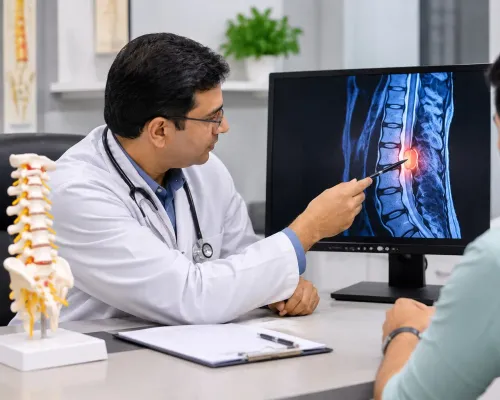
An MRI cannot predict walking ability by itself. It shows the shape and degree of narrowing, not how quickly your symptoms begin or how far you can walk. Narrowing also appears in people without walking problems, so the scan must match your symptom pattern and neurologic examination.
Your clinician records walking distance, standing time, symptom onset and relief with sitting. The assessment can include observed walking, repeated heel-and-toe testing, leg strength, reflexes, sensation and balance. A seated examination can look normal when symptoms appear only after exertion or prolonged standing.
Treatment is matched to function, not the scan alone:
| Option | What it does | When it applies |
|---|---|---|
| Exercise-based physical therapy and conditioning | Builds walking tolerance, strength and movement control | Initial treatment when weakness is not progressing |
| Flexion-tolerant walking or cycling | Maintains activity with less back extension | When upright walking triggers symptoms but leaning forward helps |
| Pain strategies | Reduces symptoms enough to support movement and rehabilitation | When pain limits exercise |
| Epidural injection | May provide short-term relief; it does not widen the canal permanently | Selected cases when pain blocks rehabilitation or a decision about surgery |
| Decompression surgery | Removes pressure on affected nerves | Substantial functional restriction that persists after nonoperative care, or progressing weakness |
Decompression surgery usually improves leg symptoms and walking disability more reliably than nonspecific low-back pain. Fusion is not automatic; it is considered when instability, deformity or selected spondylolisthesis is present.
Dr Amit Aiwale-Best Neurosurgeon in Thane can assess whether complex symptoms match the MRI and discuss advanced or minimally invasive care; an abnormal scan alone does not establish a need for surgery.
Related service
Lumbar Canal Stenosis Lumbar Spinal Stenosis is a condition where the spinal canal in the lower back narrows, compressing the nerves that travel to the legs, causing... View service → |
Frequently asked questions
Why do standing and walking trigger leg symptoms in lumbar canal stenosis?
Standing and walking extend the lower back, narrowing the space around spinal nerves. Symptoms can spread into one or both legs, while sitting or bending forward often brings relief.
How can you distinguish stenosis-related walking limits from other problems?
Stenosis commonly causes leg pain, heaviness, tingling, or weakness during standing or walking that improves with sitting or forward bending. Compare this pattern with joint pain, circulation problems, balance disorders, and nerve conditions during a clinical assessment.
What changes can lumbar canal stenosis cause in everyday mobility?
You may need more breaks, avoid stairs, shorten shopping trips, use a rail or walking aid, and plan routes with places to sit. Record the distance and standing time that bring on symptoms.
Which warning signs require urgent care?
Seek urgent medical care for new loss of bladder or bowel control, numbness around the saddle area, or rapidly worsening leg weakness. These symptoms can signal serious nerve compression.
How do clinicians measure walking disability and choose treatment?
Clinicians assess your walking distance, standing tolerance, leg symptoms, strength, sensation, reflexes, balance, and daily limitations. They combine the examination with imaging and your response to non-surgical care when selecting treatment.