
Small changes in hand control, walking, or balance can signal a neurological problem even when neck pain is mild or absent. By the end, you will know which patterns deserve prompt assessment, which symptoms require urgent care, and how clinicians determine whether spinal-cord compression is clinically significant.
Key takeaways
- Report new hand clumsiness, dropping objects, or handwriting changes.
- Look for balance and walking changes alongside hand symptoms.
- Seek prompt review when symptoms worsen or walking suddenly deteriorates.
- An examination and scans help identify spinal-cord compression and its cause.
The first clues often appear in your hands
Hand clumsiness that is new, worsening, or paired with balance trouble deserves more than an “ageing” explanation. Notice dropping objects, difficulty fastening buttons, handwriting changes, trouble using cutlery, or needing both hands for tasks that were once easy.
These problems can reflect reduced fine motor control from cervical spinal-cord compression, even when neck pain is mild or absent.
| Pattern | More consistent with | What should raise concern |
|---|---|---|
| Soreness or stiffness in one area | Ordinary ageing or neck strain | Symptoms settle with rest and do not cause loss of dexterity |
| Numbness in selected fingers or one hand | Carpal tunnel syndrome, ulnar neuropathy, or radiculopathy | Weakness, symptoms spreading beyond one nerve, or new walking problems |
| Clumsy hands affecting both sides | Cervical myelopathy | Hand dysfunction combined with leg or balance changes |
Concern rises when hand changes occur with leg stiffness, a heavy or dragging feeling in the legs, slower walking, a wider base, frequent tripping, difficulty on stairs, or reliance on a railing.
A minor fall or whiplash can unmask symptoms in an already narrow spinal canal, so new weakness or gait disturbance after neck trauma needs prompt assessment rather than routine observation. Arrange neurological review if these changes progress; do not dismiss them as ordinary stiffness.
Look for a spinal-cord pattern, not one painful spot
A painful neck or numb hand does not identify the source by itself. Neck strain usually causes local soreness and movement-related pain without progressive loss of coordination. Carpal tunnel syndrome tends to affect the thumb, index, middle, and part of the ring finger, while radiculopathy follows one nerve root into one arm.
Spinal-cord involvement creates a broader pattern.
Look for combinations such as:
- Clumsiness or reduced fine motor control in both hands, including trouble with buttons, handwriting, cutlery, or dropped objects
- Stiffness, heaviness, dragging, or altered sensation in both legs
- Hand symptoms together with imbalance, frequent tripping, a wider walking base, or difficulty on stairs
- Symptoms that are uneven or one-sided but extend beyond one finger or one nerve territory
- An electric-shock sensation down the spine or into the limbs when bending the neck forward
Peripheral neuropathy versus myelopathy is not settled by numbness alone. Peripheral neuropathy commonly begins in a length-dependent pattern, such as both feet, and may cause burning or reduced sensation without the hand-clumsiness-and-gait combination.
A clinician becomes more concerned about cervical cord involvement when examination shows brisk reflexes, a positive Hoffmann sign, ankle clonus, or an extensor plantar response.
These signs can be absent early, so normal reflexes do not exclude myelopathy. Spurling testing targets radiculopathy; it cannot reliably rule out cord compression. Progressive or combined symptoms warrant a neurological examination and usually a cervical MRI.
Walking changes and sudden deterioration need action
A new wide-based gait, leg stiffness, or heavy or dragging legs deserves medical assessment, especially when walking has become slower, less secure, or different over weeks or months.
Frequent tripping, difficulty with tandem walking, trouble on stairs, or needing a railing can reflect spinal-cord dysfunction even when you describe the problem as “balance” trouble rather than weakness.
| Symptom pattern | Action | Why it matters |
|---|---|---|
| Stiff, wide-based, or unsteady walking; frequent tripping or falls | Arrange prompt clinical assessment | These changes can indicate impaired cord pathways rather than ordinary ageing |
| Walking decline combined with hand clumsiness, numbness, brisk reflexes, or worsening leg function | Seek prompt assessment, particularly if symptoms are progressing | A combination affecting hands and legs raises concern for cervical myelopathy |
| New weakness, hand dysfunction, or gait disturbance after a fall, whiplash, or neck injury | Obtain prompt medical assessment rather than observing it at home | Trauma can expose or worsen problems in an already narrowed spinal canal |
| New urinary urgency, frequency, difficulty starting, or leakage | Tell the assessing clinician promptly | Bladder symptoms can occur as myelopathy advances |
| Acute urinary retention, loss of bowel or bladder control, or saddle numbness | Go to an emergency department immediately | This combination signals possible severe neurological compression |
Do not wait for paralysis before seeking help. Worsening balance, walking, dexterity, or limb function over days to months can leave deficits less reversible when assessment is delayed. Sudden neurological deterioration, repeated falls, or rapidly developing weakness requires urgent evaluation.
What the examination and scans are designed to find
A neurological examination looks for disruption of spinal-cord pathways, not merely neck pain. Strength testing identifies true weakness; dexterity tasks such as finger tapping, buttoning, or handling small objects expose reduced fine motor control. Gait testing assesses balance, leg stiffness, stride, foot clearance, and the need for a wider base or handrail.
The examiner checks for these cord-related signs:
- Hyperreflexia: unusually brisk reflexes suggest an upper-motor-neuron problem.
- A positive Hoffmann sign: thumb or finger movement after flicking a fingernail supports cervical cord involvement.
- Clonus: repeated ankle beats after sudden dorsiflexion indicate increased reflex activity.
- A Babinski response: the big toe moves upward instead of downward when the sole is stimulated.
- Progressive weakness, hand clumsiness, or an abnormal gait: the combination matters more than any single test.
These signs can be absent early, so normal-looking reflexes do not exclude myelopathy. MRI is usually the key scan because it shows the spinal cord, disc or bone compression, and cord signal changes that suggest injury. CT shows bone detail, including osteophytes, fractures, and canal narrowing, but does not show the cord as clearly.
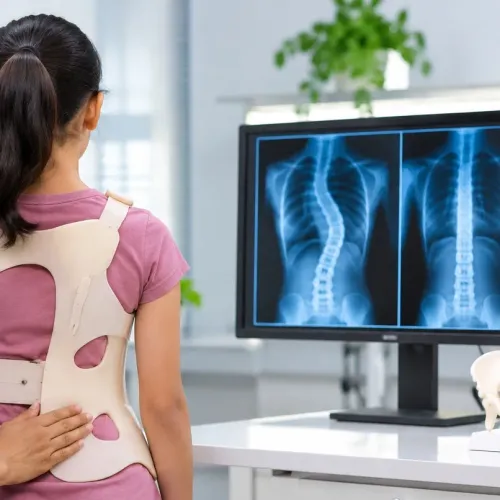
X-rays assess alignment, curvature, and instability; they cannot confirm cord damage. Clinically significant myelopathy is established by matching the symptom pattern and examination findings with compression or cord change on imaging, rather than treating an incidental scan finding alone.
When progressive symptoms call for specialist review
Arrange prompt medical assessment if hand function, balance, or walking worsens over weeks or months. Progressive neurological symptoms can become less reversible when evaluation is delayed, even without neck pain or when one side is more affected.
At the appointment, ask for:
- A neurological examination comparing strength, reflexes, sensation, dexterity, and gait.
- A cervical spine MRI when spinal-cord compression is suspected; it shows whether narrowing matches your examination and symptoms.
- An explanation of whether the scan shows clinically important compression or incidental age-related narrowing.
- A clear follow-up interval if symptoms are mild, with instructions on which changes require earlier review.
A surgical consultation does not automatically mean surgery. It connects the pattern of weakness, reflex changes, hand control, and walking difficulty with choices such as structured observation for stable mild disease or decompression when disease is moderate, severe, or deteriorating.
A scan alone cannot make that decision: dramatic narrowing can be incidental, while symptoms can matter even when neck pain is absent.
Dr Amit Aiwale-Best Neurosurgeon in Thane can provide a spine-focused neurosurgical review that weighs the examination, MRI findings, symptom progression, and risks of waiting before discussing treatment. Seek emergency care for rapidly worsening weakness, inability to walk safely, or new loss of bladder or bowel control.
Frequently asked questions
What are the first warning signs of spinal myelopathy?
Early clues often include new or worsening hand clumsiness, dropping objects, difficulty fastening buttons, handwriting changes, and trouble using cutlery.
How can spinal myelopathy affect walking?
It can cause balance trouble, changes in walking, and deterioration that becomes more concerning when it appears with hand symptoms.
Why is a spinal-cord pattern more important than one painful spot?
Spinal myelopathy can produce symptoms across the hands, arms, balance, and legs, so the pattern matters more than pain in one location.
What do the examination and scans look for?
The examination assesses hand function, balance, walking, strength, sensation, and reflexes. Scans help identify spinal-cord compression and the underlying spinal cause.
When should progressive symptoms prompt specialist review?
Arrange specialist review when hand clumsiness, balance problems, or walking changes are new, worsening, or accompanied by sudden deterioration.
Keywords