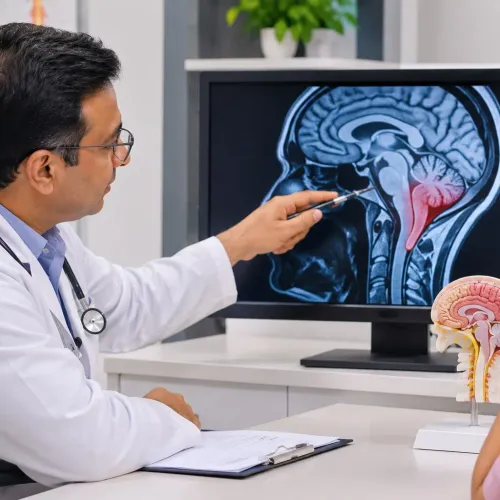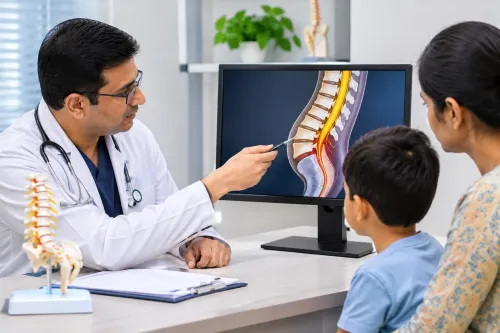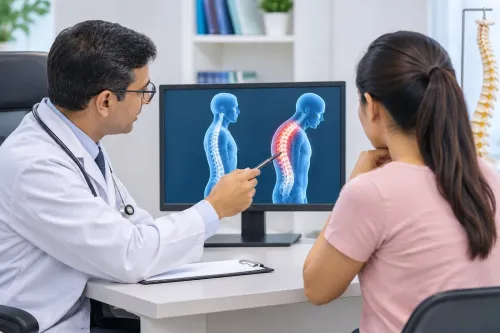

Brain and spine conditions can affect movement, sensation, balance, speech and everyday independence. Choosing a brain and spine specialist in Thane should therefore involve more than checking qualifications or selecting the first name displayed in an online search.
Dr Amit Aiwale evaluates conditions across the nervous system, helping patients identify whether their symptoms arise from the brain, spinal cord, spine or peripheral nerves. When comparing specialists, patients should look at diagnostic approach, condition-specific experience and the clarity of the proposed treatment plan.
Confirm That the Specialist Treats Your Condition
The field includes brain tumours, head injuries, spinal cord compression, herniated discs, spine fractures, hydrocephalus, nerve disorders and other complex conditions.
Ask whether the specialist regularly manages your diagnosis. A patient with a spinal tumour may require different experience from someone seeking treatment for a single-level slipped disc.
Relevant questions include:
- Have you treated this type of condition before?
- What investigations are needed to confirm the diagnosis?
- Are both surgical and non-surgical options available?
- Does the condition require urgent treatment?
- Which factors may influence the outcome?
Specific answers are more useful than broad claims about treating every neurological problem.
Expect More Than a Scan Review
MRI and CT images are important, but they do not replace a neurological examination. Some spinal changes are visible in people who have no major symptoms, while a seemingly small abnormality can be serious if it affects an important area.
The specialist should evaluate strength, sensation, reflexes, balance, coordination or cognitive function as relevant. The recommended treatment should connect the scan findings with the patient’s actual symptoms.
Evaluate How Treatment Options Are Explained
A suitable specialist should explain why one approach is being considered and what alternatives exist. For spine conditions, the options may include medication, physiotherapy, injections, decompression or stabilisation. Brain conditions may require monitoring, biopsy, surgery, radiation-related coordination or multidisciplinary care.
Patients should understand:
- The main objective of treatment
- The expected benefit
- Important risks and limitations
- Whether treatment can be postponed safely
- What recovery may involve
- Whether rehabilitation will be required
Be cautious when a complex procedure is presented as risk-free or guaranteed to eliminate every symptom.
Ask About the Surgical Technique
Minimally invasive, microscopic, endoscopic and open techniques each have appropriate uses. The latest-sounding method is not necessarily the best method for every diagnosis.
A responsible recommendation considers the condition’s size, location and complexity. The safest approach is the one that provides adequate access while protecting surrounding brain tissue, nerves, muscles and blood vessels.
Review the Wider Care Setup
Brain and spine treatment may involve anaesthetists, radiologists, neurologists, physiotherapists, rehabilitation professionals and trained nursing teams. Ask where the procedure would be performed and what postoperative monitoring is available.
For patients in Thane and surrounding Maharashtra locations, accessibility during recovery also matters. Some conditions require wound checks, repeat imaging, medication adjustment or multiple rehabilitation sessions.
Know When a Second Opinion Is Valuable
Consider another opinion when:
- The diagnosis remains unclear
- Major surgery has been recommended
- More than one procedure is possible
- Different specialists provide conflicting advice
- The expected outcome has not been explained
- You do not understand why surgery is necessary
The right brain and spine specialist should help the patient understand the condition rather than simply present a procedure. Relevant experience, careful examination and honest communication provide a stronger basis for selection than rankings or promotional claims alone.
Keywords