# *Type 2 Odontoid Fracture (Dens Fracture)*
## *What is it?*
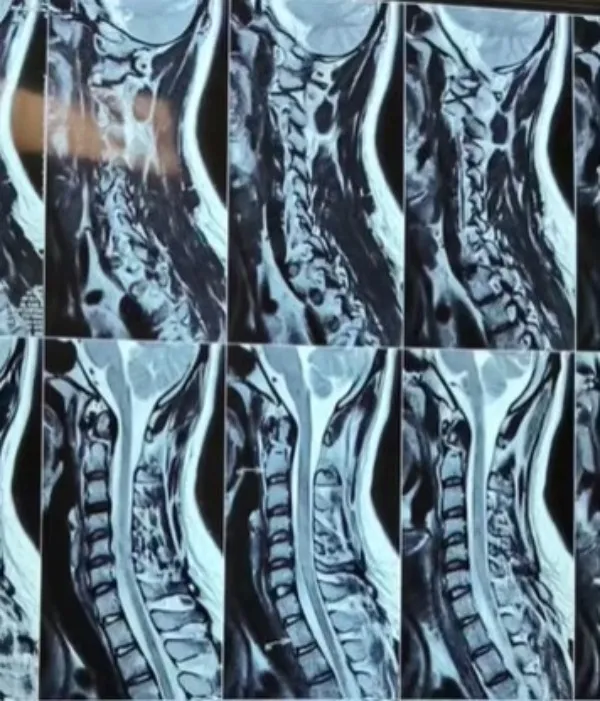
A Type 2 odontoid fracture is a break at the *base of the odontoid process (dens)* of the C2 vertebra (axis). It is the *most common and most unstable* type of odontoid fracture.
---
## *Why is it important?*
This fracture occurs at a *watershed zone with poor blood supply*, making it prone to:
* *Non-union (failure to heal)*
* *Instability between C1 and C2*
* Risk of *spinal cord injury* (can be life-threatening)
---
## *Common Causes*
* Elderly: trivial fall (most common)
* Young patients: high-velocity trauma (RTA, fall from height)
--
## *Clinical Features*
* Neck pain and stiffness
* Restricted neck movements
* Occipital headache
* Neurological deficit (rare but serious)
---
## *Treatment Options*
### 1. Conservative (Selected cases)
* Rigid cervical collar / halo vest
* High failure rate (especially in elderly)
### 2. Surgical Treatment (Preferred in most cases)
---
# *Anterior Odontoid Screw Fixation*
## *Concept*
A screw is placed from anterior neck into the dens to *compress the fracture and allow healing*, while preserving motion.
---
## ✅ *Advantages*
### 1. *Preserves neck rotation*
* Maintains *~50% of cervical rotation* (C1–C2 joint function preserved)
### 2. *Direct fracture healing*
* Promotes *biological union* (not fusion)
### 3. *Less invasive (functionally)*
* No muscle dissection posteriorly
* Less postoperative stiffness
### 4. *Better quality of life*
* Especially beneficial for *young and active patients*
---
## ❌ *Disadvantages / Risks*
### 1. *Technically demanding*
* Requires:
* Proper fracture alignment
* Good trajectory
* Adequate bone quality
### 2. *Not suitable in all cases*
Contraindicated in:
* Comminuted fractures
* Severe displacement/angulation
* Chronic fractures
* Osteoporosis
* Short neck / barrel chest (difficult access)
### 3. *Failure/non-union risk*
* Improper case selection → higher failure
### 4. *Intraoperative risks*
* Injury to:
* Esophagus
* Trachea
* Neurovascular
Keywords